
Plate Clamps
-
-
-
-
-
-
-
-
-
-
-
-
-
-
-
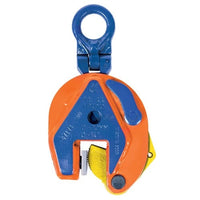
-
3 Jaw opening
- No minimum load limit
- Can lift materials with a surface hardness of up to 400 Brinell
-
3 Jaw opening
- No minimum load limit
- Can lift materials with a surface hardness of up to 400 Brinell
-
3 Jaw opening
- No minimum load limit
- Can lift materials with a surface hardness of up to 400 Brinell
-
-
-
-
3 Jaw opening
- No minimum load limit
- Can lift materials with a surface hardness of up to 400 Brinell
Plate Clamps for Lifting
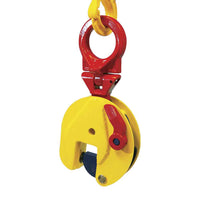
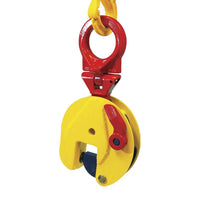
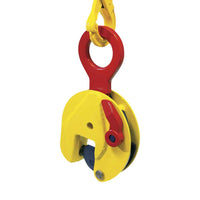
Moving sheet metal, steel plate, and similar flat stock without welding, drilling, or wrapping a sling around it is exactly what a plate clamp is built for. The clamp attaches directly to a crane hook, hoist, or lifting beam, and its jaws bite into the material to hold it securely while it's suspended or in transit. Whether you're pulling sheet stock off a pallet or moving plate on a fab floor, the right clamp comes down to three things: load, jaw opening, and material hardness.
Choosing the Right Clamp
Once you know your orientation needs (more on that below), narrowing down the specific clamp comes down to matching it to your material.
Working Load Limit
Pick a clamp with a working load limit that exceeds your load's weight, but not by a wide margin; get as close to the actual weight as you can without going under. Undersizing the load relative to the clamp's rated capacity causes real problems too: lifting something 20% or more below a clamp's WLL can cause as much wear and damage as overloading it.
Jaw Opening
Match the jaw opening as closely as possible to your material's width. A closer match means more grip surface, which means a more secure hold.
Clamp Force and Material Hardness
Harder surfaces need more clamping force to grip securely, and some clamps are built and rated for specific hardness levels to guarantee that hold. Check a clamp's rated hardness range against your material before use, not just its WLL and jaw opening.
Vertical vs. Horizontal
Plate lifting clamps come in two primary orientations, and the name tells you exactly what it means.
Vertical Lifting Clamps
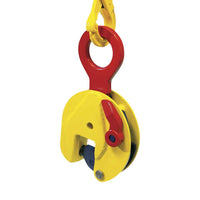
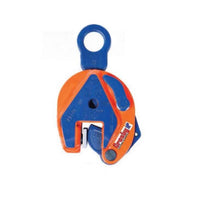
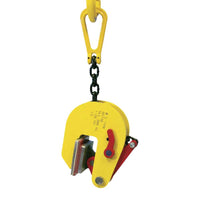
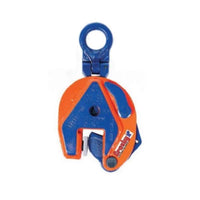
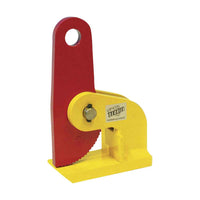
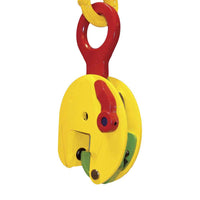
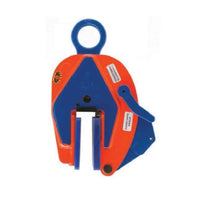
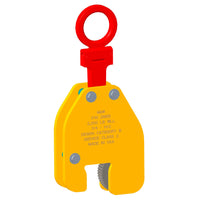
Vertical clamps close their jaws vertically to grip a sheet or plate securely. Most are built for vertical-only lifting, though a subset called universal lifting clamps can move a sheet between horizontal and vertical orientation with the same clamp.
Horizontal Lifting Clamps
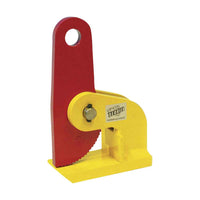
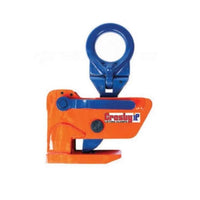
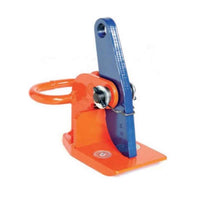
Horizontal clamps work in pairs, one on each side of the sheet. This style is common for both lifting and unloading, since a matched pair lets you move multiple sheets at once.
Questions?
Not sure which plate clamp fits your application? Call to speak with one of our product specialists. We also carry a full line of other lifting and rigging products, including lifting beams and spreader bars, nylon lifting slings, and outrigger pads.
FAST SHIPPING, EXPERT SERVICE.
FIND IT FAST. GET IT FAST.
We stock thousands of connectors, fasteners, and more & ship fast to keep your project moving. Need assistance? Contact our experts today.