Wheel Straps for Auto Hauling
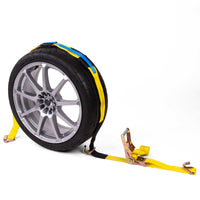
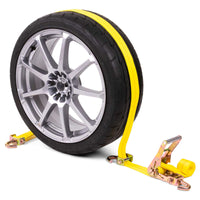
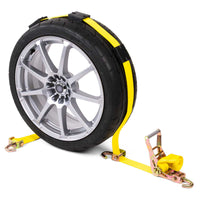
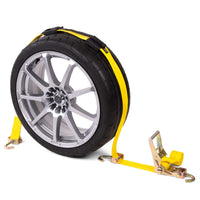
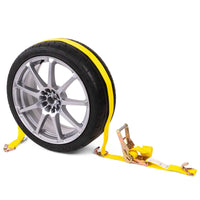
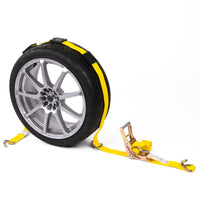
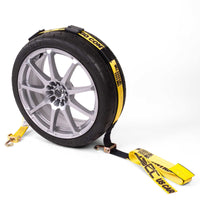
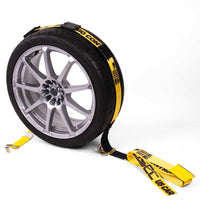
Wheel straps secure a vehicle by fitting over the tire and connecting to compatible anchor points on a flatbed, car hauler, or trailer. Also called over-the-tire straps or tire tie-down straps, they keep the webbing close to the wheel and avoid the need to attach directly to the vehicle’s frame or axle.
This securement method is especially useful for sports cars, modified vehicles, and other low-profile vehicles with limited underbody clearance. Because the strap works around the tire, it can also help reduce the risk of contact with body panels and suspension components.
Wheel Tie-Down Strap Features
Rubber Tread Blocks
Select wheel straps include rubber blocks positioned along the webbing. These blocks fit against the tire tread to help keep the strap centered and properly positioned during transport.
Hook-End Wheel Straps
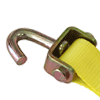
Wheel tie-down straps with wire hooks or swivel J-hooks connect to compatible trailer and flatbed anchor points. Swivel hooks allow the fitting to rotate, helping the strap align with anchor points positioned at different angles.
E-Track Wheel Straps
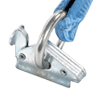
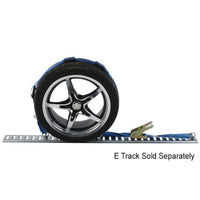
E-track wheel straps use spring-loaded E-fittings that connect directly to compatible E-track rails. This design provides an adjustable connection point anywhere along the usable sections of the track, making it a practical option for enclosed trailers and vehicle transport setups equipped with E-track.
Single Wheel Straps and 4-Packs
Many wheel strap configurations are available individually or in convenient 4-packs. Securing all four tires can help distribute restraint around the vehicle and reduce movement during transport. Always follow the vehicle, trailer, and strap manufacturers’ instructions, along with applicable cargo securement requirements.
How to Choose the Right Wheel Straps
Consider the following factors when selecting tire straps for a car-hauling application:
-
Tire dimensions: Confirm that the strap’s adjustment range fits the tire width and circumference.
-
Anchor system: Match wire hooks, swivel J-hooks, or E-track fittings to the available trailer anchor points.
-
Vehicle clearance: Check that the strap and hardware will not contact the body, brakes, suspension, or other vehicle components.
-
Working load limit: Use the rating of the complete strap assembly when evaluating its capacity.
-
Quantity: Determine how many straps are required for the vehicle, trailer configuration, and applicable securement method.
How to Measure Tires for Wheel Straps
Do not choose an over-the-tire strap based only on the vehicle’s make and model. Tire sizes can vary by trim level, wheel package, and aftermarket modifications. Measure the tire and compare the dimensions with the stated fit range of the wheel strap before ordering.
When installed, the strap should sit securely over the tire without twisting or contacting sharp edges. Make sure the webbing remains centered and every hook or fitting is fully engaged before tensioning.
Additional Auto Tie-Down Options
Other vehicle securement options include wheel nets, axle straps, tow dolly basket straps, and replacement tie-down hardware. The appropriate style depends on the vehicle, tire size, trailer design, and available anchor points.
Inspect the webbing, stitching, hooks, fittings, ratchets, and trailer anchors before each use. Remove any strap from service if it shows cuts, excessive abrasion, damaged stitching, bent hardware, corrosion, or other signs of wear.